Kenny Alley Always had a Name

One of the first things the neighbors working to revitalize the alley noticed was that it already had a name.

A standard City street sign identified it as Kenny Alley. Until then, many nearby residents had simply thought of it as the alley or the stairs between London Street and Mission Street. Discovering that it had an official name changed the way the project took shape.
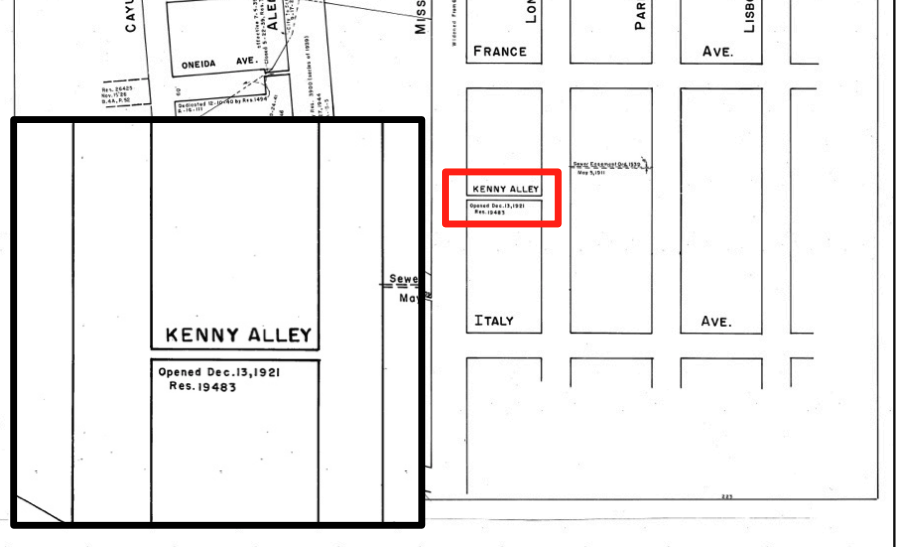
As the history of the alley was researched, residents learned that Kenny Alley had been established as a public passage in 1921. Long before the revitalization project began in 2015, it quietly connected Excelsior neighbors between London Street and the Mission Street commercial corridor. Every day, people walked through the alley to reach transit, neighborhood markets, restaurants and local businesses.

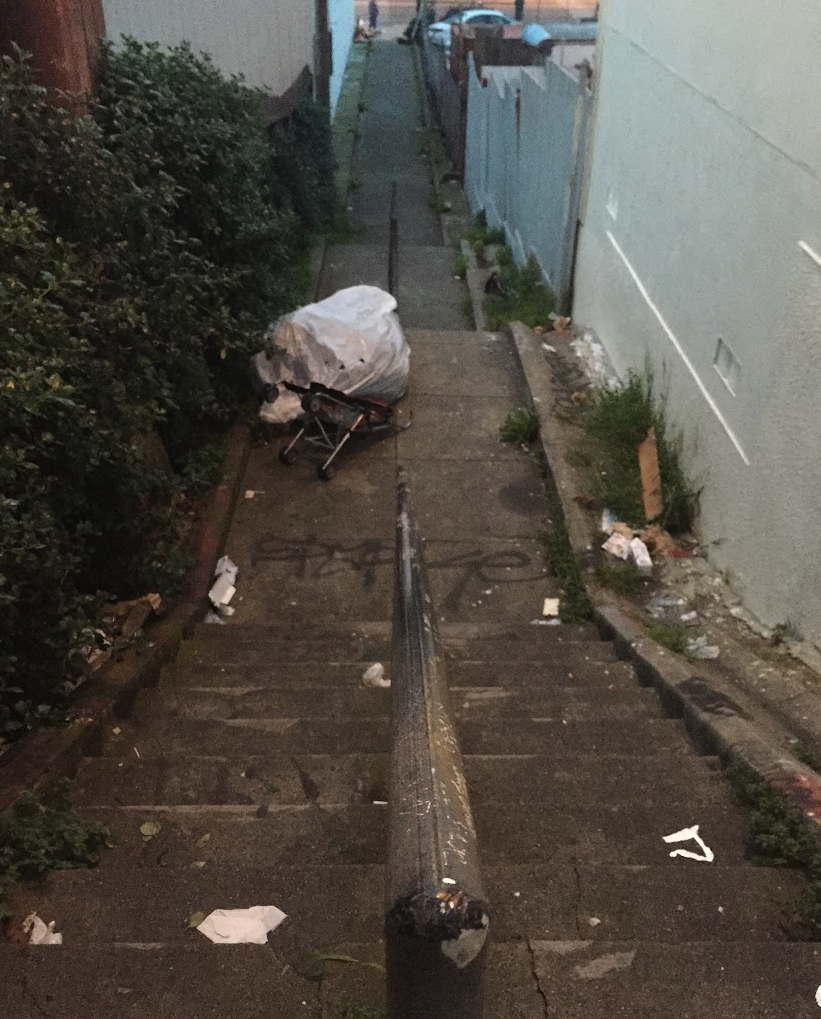
By 2015, however, the alley had become known for something else. Graffiti, illegal dumping, poor lighting and neglect had made it an unpleasant place to walk, despite its importance as a neighborhood connection.

The discovery that the alley already had a name sparked an idea among the project volunteers.

Places with names have identities. Identities give people something to recognize, talk about and care for.

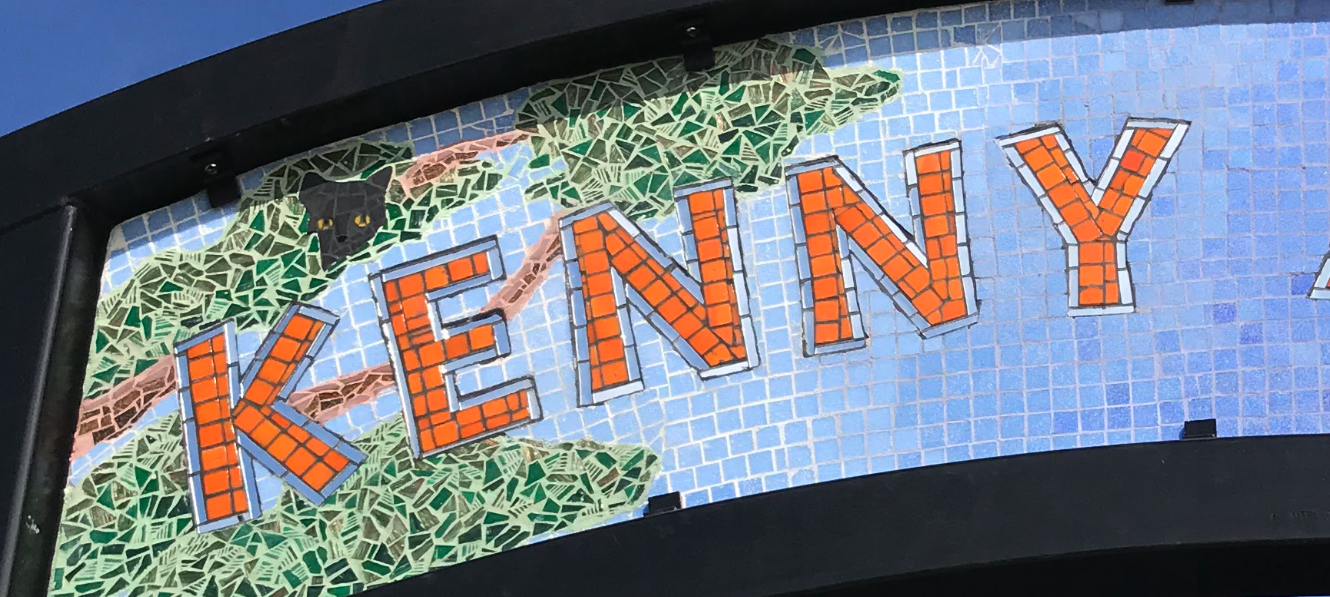
After Friends of Kenny Alley was formed, volunteers embraced the alley's name as part of its new identity. Rather than treating it as simply another beautification project, the group chose to celebrate the name and make it visible. Plans eventually included a permanent mosaic monument sign at the Mission Street entrance proudly identifying Kenny Alley. The reverse side featured a matching Mission Street mosaic, inspired by the wayfinding mosaics found in subway stations around the world.
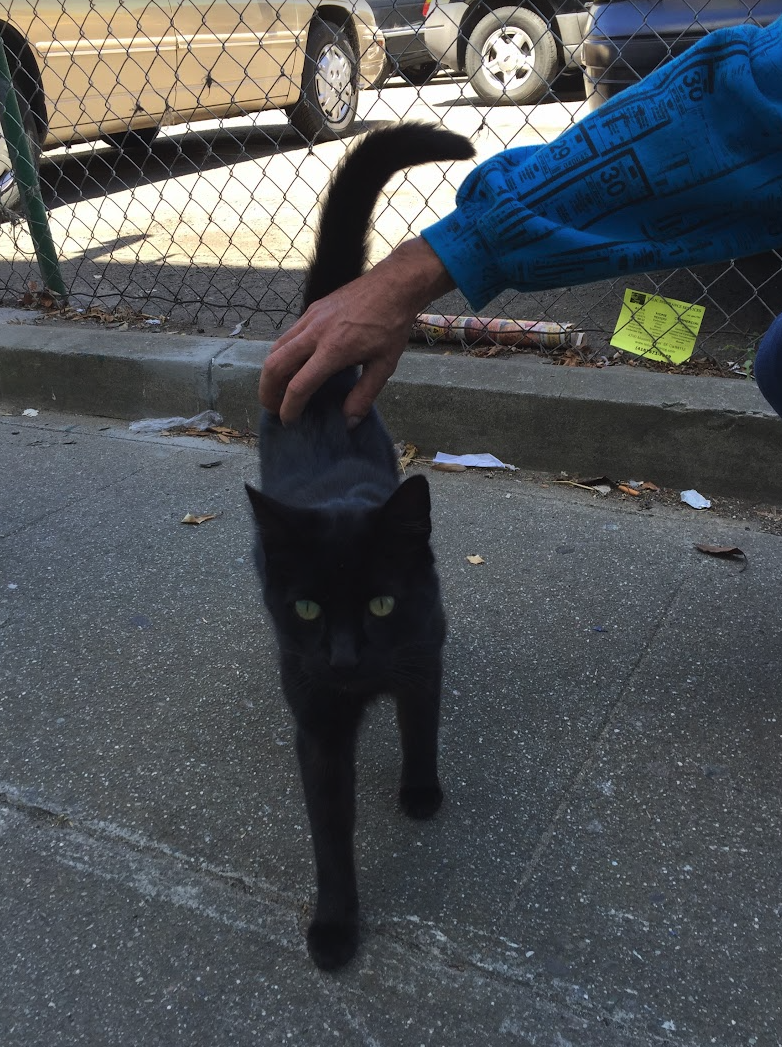
Around the same time, the volunteer team adopted the alley's resident black cat. Naturally, he became Kenny, named after the alley he called home. He quickly became the project's unofficial mascot and was later immortalized in the monument sign, where he still watches over the entrance today.
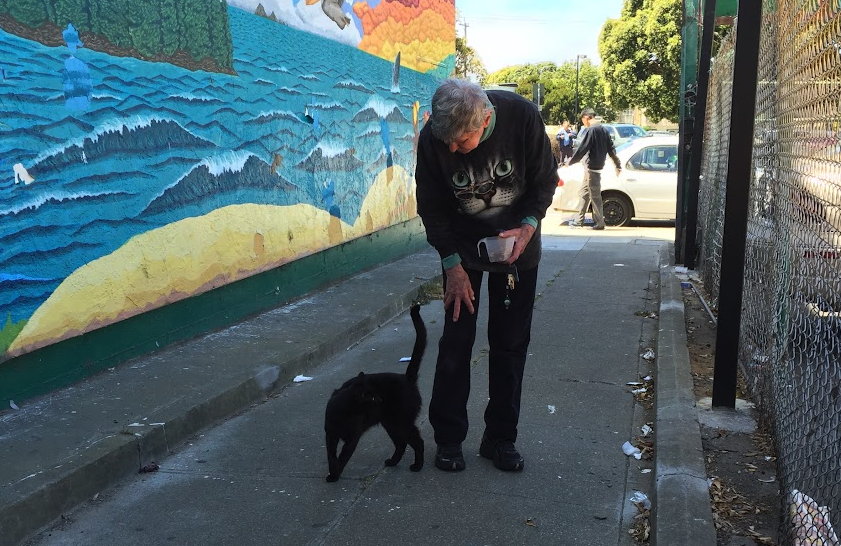
No story about Friends of Kenny Alley would be complete without remembering Roseann Harris, a longtime Excelsior resident, dedicated volunteer and friend to every neighborhood cat she met. Roseann played an essential role throughout the project, and her kindness, generosity and commitment left a lasting mark on both the volunteer team and the neighborhood. Friends of Kenny Alley lovingly dedicate this story to her memory.

Sometimes stewardship begins by simply recognizing that a place already has an identity.
A Decade Later: Remembering How Kenny Alley Changed


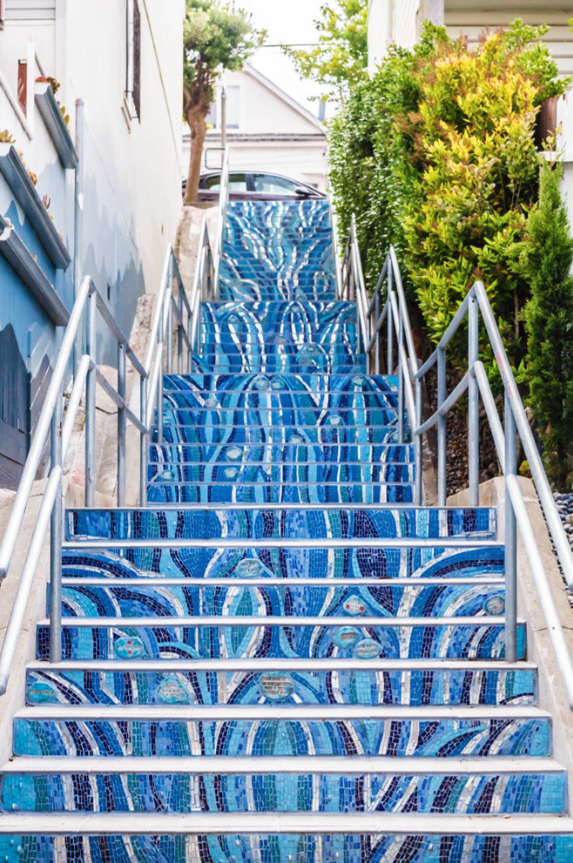
Ten years ago, Kenny Alley was an overlooked public stairway connecting Mission and London streets in San Francisco’s Excelsior neighborhood. The stairs were worn, frequently tagged with graffiti, and often described by neighbors as a place people hurried through rather than gathered around.

That began to change in 2015 when Friends of Kenny Alley formed to reimagine the space. Spearheaded by community member Summer Koide and Excelsior Action Group EAG, the effort brought together residents, artists, neighborhood organizations, city agencies, local businesses, schools, and donors around a shared goal: transforming the alley into a safer, more welcoming public place.

Over the following years, the project grew well beyond a staircase. Volunteers organized cleanups, raised funds, planted gardens, improved lighting, installed public art, and created the now-recognizable mosaic stairway. Hundreds of people contributed in ways both large and small, leaving a lasting mark on the neighborhood.

Today, Kenny Alley stands as a reminder of what can happen when a community works together around a common vision. As the project reaches its tenth anniversary, this page will be sharing stories, photographs, and memories from the people who helped make it possible.

Were you part of the journey? We’d love to hear what you remember.

Our Journey, Part 1: Inspiration and Serendipity

When I first moved to London Street I didn't even notice Kenny Alley.  In fact, I didn't even see it for probably three years!  I don't remember how I found it, but it quickly became my shortcut from home to the 29 Muni stop at Safeway.  

On my groggy walks to the bus stop, I'd encounter the craziest things at Kenny Alley.  Sure, there were lots of broken bottles, leftover food, random litter...but there were also mattresses, vacuum cleaners (plural!), wigs, raw meat (lots of it, time and time again), cat food, used feminine products, dirty diapers, empty packages of Swisher Sweets, security bottle tops from Safeway and plenty of other insane things.  I desperately wanted to know what was going on in this walkway at night.  Who was putting these things here?  Were they coming here for the sole purpose of leaving these things at Kenny Alley? Why Kenny Alley?

\

I'd also daydream about how it could be prevented.  Signage?  Unlikely.  24/7 security?  Probably, but not a realistic option.  Neighborhood Watch?  Maybe but I didn't know many of my neighbors.  

Photo taken during actual walk to the bus in the morning

I'd also daydream about how it could be prevented.  Signage?  Unlikely.  24/7 security?  Probably, but not a realistic option.  Neighborhood Watch?  Maybe but I didn't know many of my neighbors.  

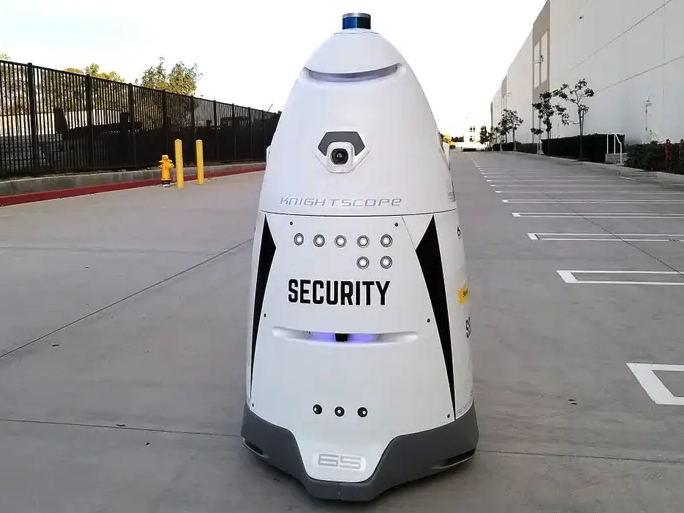
Knightscope Security Robot

In an evaluation of robotic technology, I visited the Knightscope Robotics company in Mountain View, California.  Could this security guard robot be the answer?  I knew it wasn't something we could afford, but I did seriously consider that a 300-lb autonomous robot patrolling Kenny Alley could be a good deterrent. Until someone pointed out that the robot could probably be foiled by someone simply throwing a blanket on top of it.  

One day it dawned on me that a mural would very likely deter the rampant graffiti, and may convert this alley from its pariah status to that of a neighborhood mascot that everyone loved and protected.  How does one find a muralist? I can't paint anything, and I don't have the money to pay someone. How do these murals happen?

While I was riding the bus to work, my imagination went wild.  What if there was a big mural on the apartment building, and a beautiful mosaic on the stairs?  Would lighting act as a deterrent to loitering at night?  What if we put plants, too, and some other elements?  Could we paint the walkway? 

"Who's in charge of these stairs anyway?" I thought.  "Isn't the city supposed to maintain these spaces to be clean, safe and well lit?  If they aren't maintaining the stairs but the community wants to, do we need to get approval to make some changes?  How does one even go about this?  If we could make these changes, these lasting improvements in the neighborhood, this might be the most meaningful thing I've ever done."  (After 20 years in tech, retail and advertising I had started to ponder the meaning of my work.) (Also, a couple years later I had a baby and he turned out to actually be the most meaningful thing I'd ever done.)

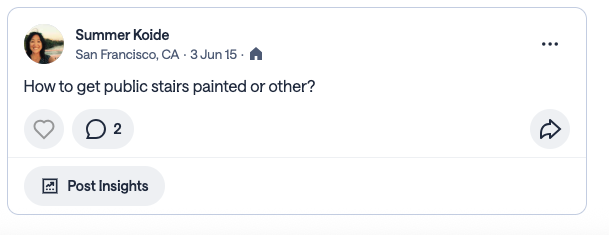
I had recently installed the NextDoor App and enjoyed reading the hyperlocal conversation and discussion topics in the Excelsior.  Other users were pretty active and most questions were quickly answered.  I posted to see if anyone knew about city property and improvements, and was quickly directed to the Excelsior Action Group and Stephanie Cajina, who were miraculously kicking off a mural project in the next few weeks!  

And that's how I got involved with Kenny Alley.